 YesDay
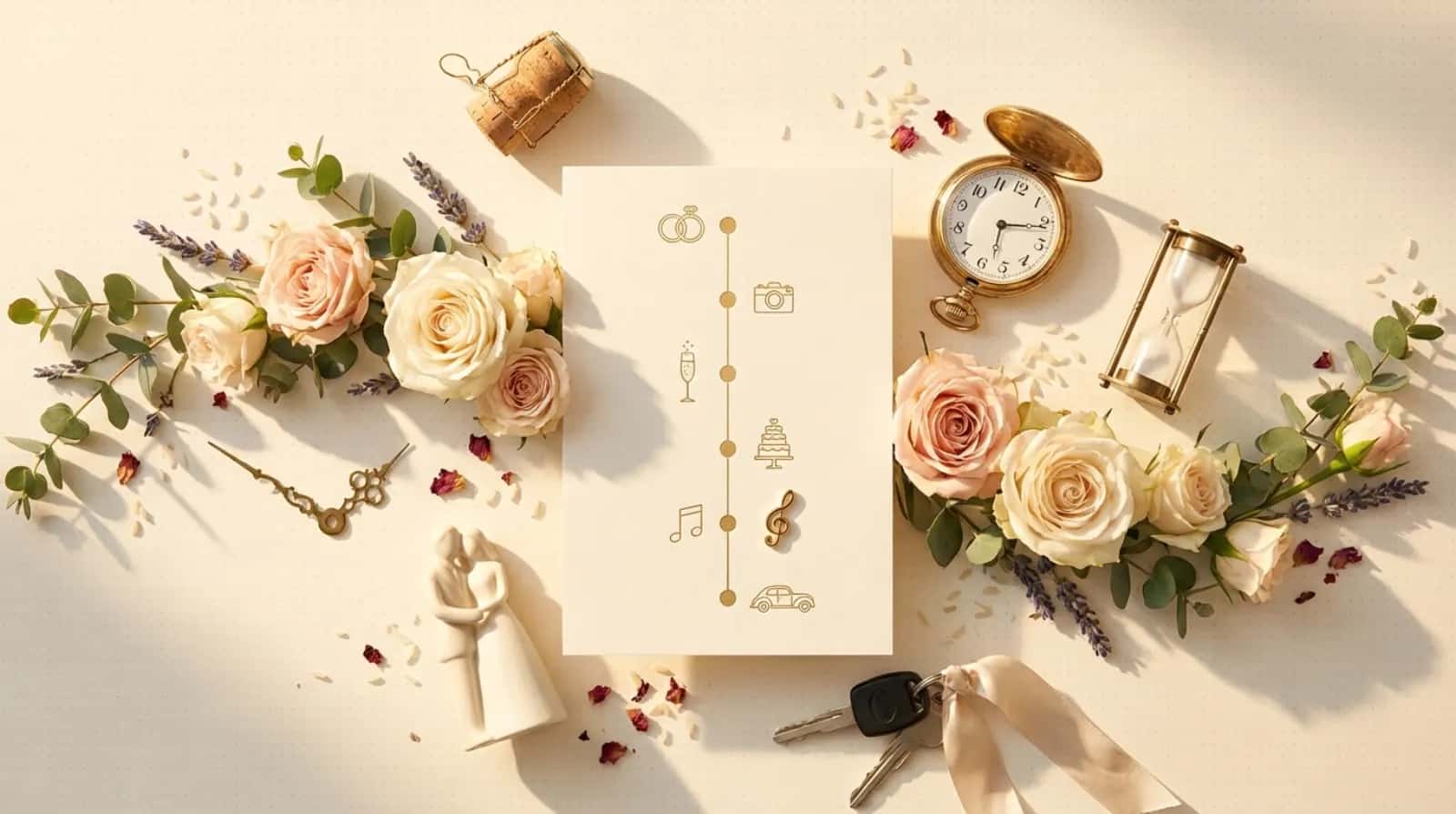
Why you need a timeline
A wedding day is dozens of events, people and journeys packed into 10–14 hours. Without a clear schedule chaos is inevitable: the guests are waiting, the photographer is nervous, the food is getting cold. A timeline is your insurance against all that.
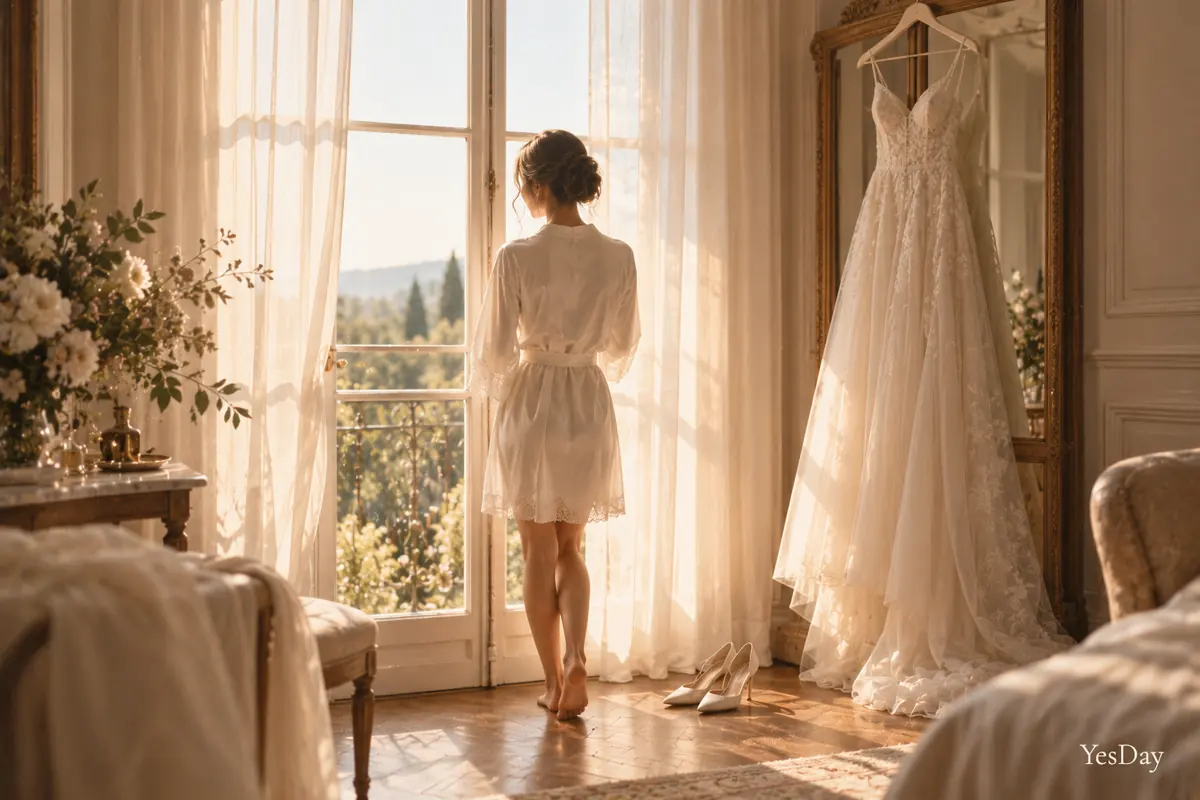 The bride getting ready in the morning
The main rule: add 15–20 minutes to every stage. A wedding NEVER goes exactly to plan — and that is fine. Buffer time saves you from stress.
A classic wedding: an hour-by-hour schedule
08:00 — The bride's morning
- Breakfast (a proper one! You won't eat normally until the evening)
- A shower, skincare
- Make-up and hair begin (usually 2–2.5 hours)
- The photographer shoots the getting ready
Meanwhile — the groom's morning:
- Breakfast
- A shower, a shave
- Getting dressed: shirt → trousers → shoes → cufflinks → jacket → boutonniere
- A photographer (if a second one is booked)
10:30 — The bride is ready
- Putting on the dress (her mother or a bridesmaid helps — the photographer shoots the lacing)
- The final touches: earrings, bracelet, perfume
- Portraits of the bride (10–15 minutes)
- The bridal bouquet
11:00 — Leaving for the ceremony
If the registry office or the outdoor ceremony is not at the reception venue:
- Allow time for traffic (on a Saturday!)
- The bride and groom travel separately (if the first look happens at the ceremony)
11:30 — First look (optional)
If the first look is not at the ceremony, the bride and groom meet in a separate place. 15–20 minutes for emotions and the first photos together.
12:00 — The ceremony
| Stage | Time |
|---|---|
| Seating the guests | 15 min |
| The groom's entrance | 2 min |
| The bride's entrance | 3 min |
| The officiant's speech | 10 min |
| Exchange of rings and vows | 5 min |
| The kiss and the announcement | 2 min |
| Congratulations from the guests | 15 min |
| Total | ~50 min |
13:00 — The photo shoot
The most important block — and the most common cause of delays.
- The couple alone — 20–30 minutes
- With the parents — 10 minutes
- With bridesmaids and groomsmen — 10 minutes
- A photo of all the guests — 5 minutes
- Details (rings, bouquet, shoes) — 5 minutes
Total: 50–60 minutes. Don't cut this block short! The photos are the only thing that will remain.
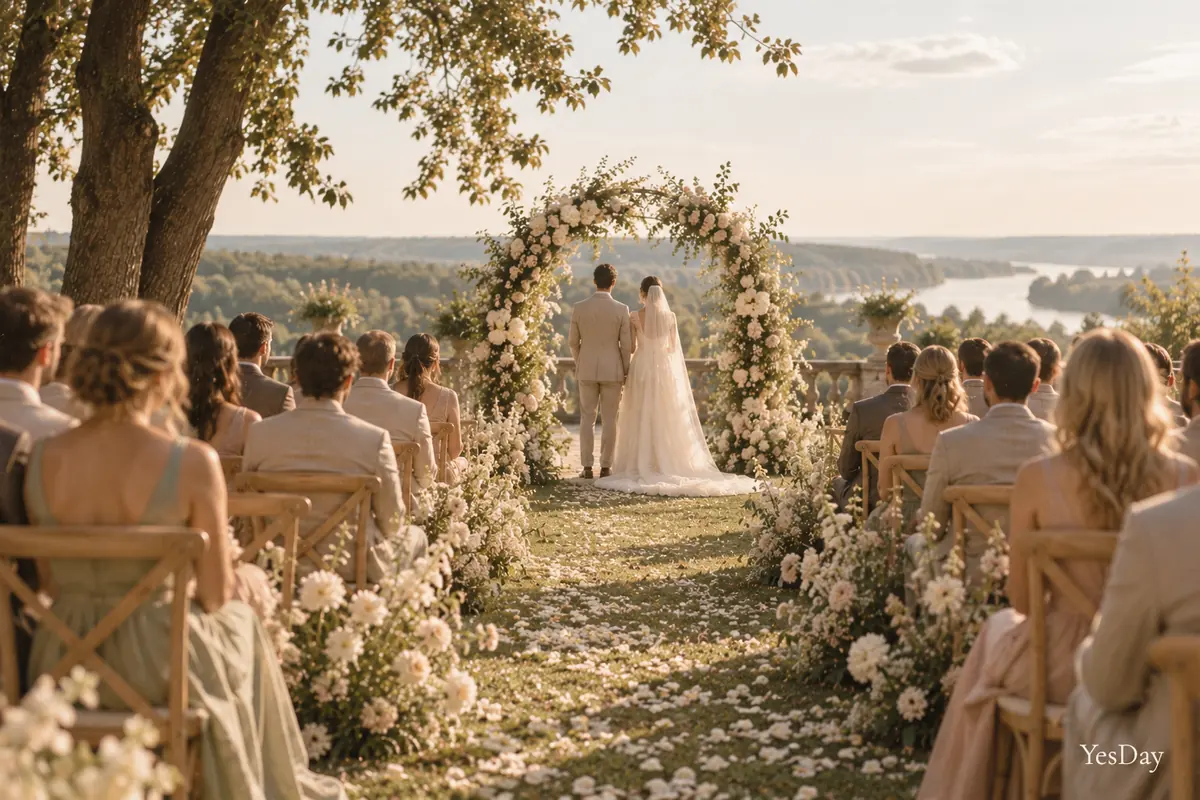 An outdoor wedding ceremony
14:00 — Welcome drinks
While the couple is being photographed, the guests shouldn't be bored. Arrange:
- Canapés and drinks
- Live music or a background playlist
- A photo corner or entertainment (board games, a quest)
- A guest book for wishes
15:00 — The reception begins
- The host announces the newlyweds
- The first toast (usually the best man, the maid of honour or the parents)
- The first course is served
- Between courses — toasts, games, activities
16:00–17:00 — The main programme
| Time | Event |
|---|---|
| 16:00 | The main course |
| 16:20 | Toasts from the guests |
| 16:40 | Games / interactive activities |
| 17:00 | A break (guests step outside for some air) |
17:30 — The first dance
Choose a moment when everyone has already relaxed but isn't tired yet. After the first dance — the bride's dance with her father and/or the groom's with his mother.
18:00 — Free time and dancing
- The DJ or band plays the hits
- An open dance floor
- A dessert table or the cake
- A photo booth
19:00 — The cake
A traditional moment: cutting the cake together. The photographer shoots, the guests applaud. If you have a dessert table instead of a cake, announce that it is open.
20:00–21:00 — The high point of the evening
- Tossing the bouquet
- Tossing the garter (optional)
- The final toasts
- A thank-you speech from the newlyweds
22:00 — The finale
- The last dance
- Sparklers or fireworks
- Seeing off the newlyweds
- The guest bus / taxis
A small wedding: a shorter timeline
For a wedding with 20–40 guests everything is simpler and more compact:
| Time | Event |
|---|---|
| 14:00 | Ceremony |
| 14:45 | Photo shoot |
| 15:30 | Lunch at a restaurant |
| 17:00 | Cake + toasts |
| 18:00 | Time to mingle |
| 20:00 | The end |
10 rules of a perfect timeline
- Buffer, buffer, buffer — +15 minutes for every stage
- Don't rush the photographer — better to cut the games than the photo shoot
- Feed the guests on time — hungry people = grumpy people
- Breaks are a must — every 1.5–2 hours
- A coordinator is a lifesaver — they watch the clock while you enjoy yourselves
- Brief your vendors — send the schedule to everyone: the photographer, the DJ, the florist, the caterer
- Transport in advance — Saturday traffic is unpredictable
- Don't plan too much — 3–4 activities per evening, not 15
- A stress-free morning — wake up an hour earlier than you "need" to
- Enjoy yourselves — the timeline exists so that you DON'T have to think about logistics
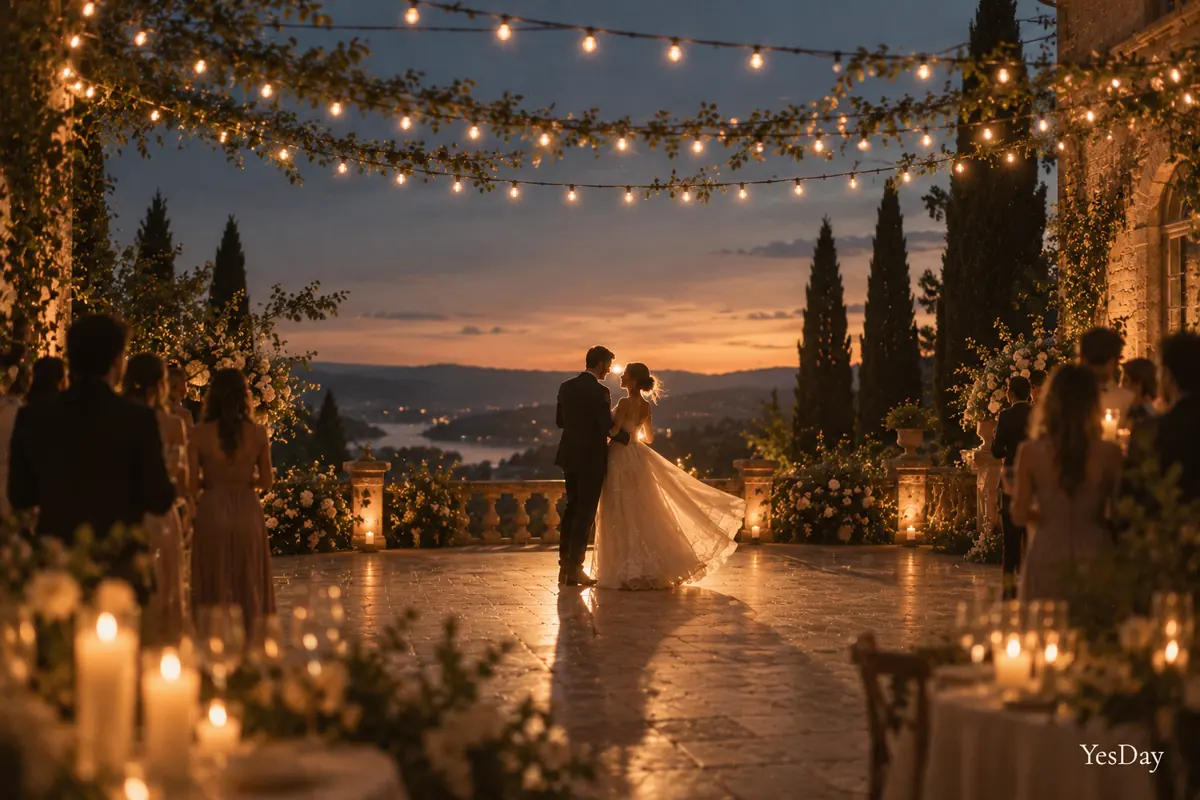 The newlyweds' first dance
A checklist for the coordinator
- The schedule with contacts for all the vendors
- Drivers' phone numbers (taxi, bus)
- An emergency kit (pins, thread, plasters, a charger)
- The number of the venue and its manager
- A list of VIP guests (who goes first)
- The music playlist and a do-not-play list
- The seating plan (printed)
- The schedule for the DJ/host
Put the schedule on your wedding website
Your guests don't need to know every detail, but they do need to understand when to arrive, when the ceremony is and when the reception starts. YesDay has a "Programme of the day" section — list the key moments, and your guests will know when to come and what to expect.
Print this timeline and adapt it to your own wedding. Have a wonderful day!