 YesDay
Why have a dress code at all?
A wedding dress code is not about control. It is about harmony. When all the guests are dressed in one colour scheme, the photographs look far more striking and the atmosphere of the celebration feels whole and well thought out.
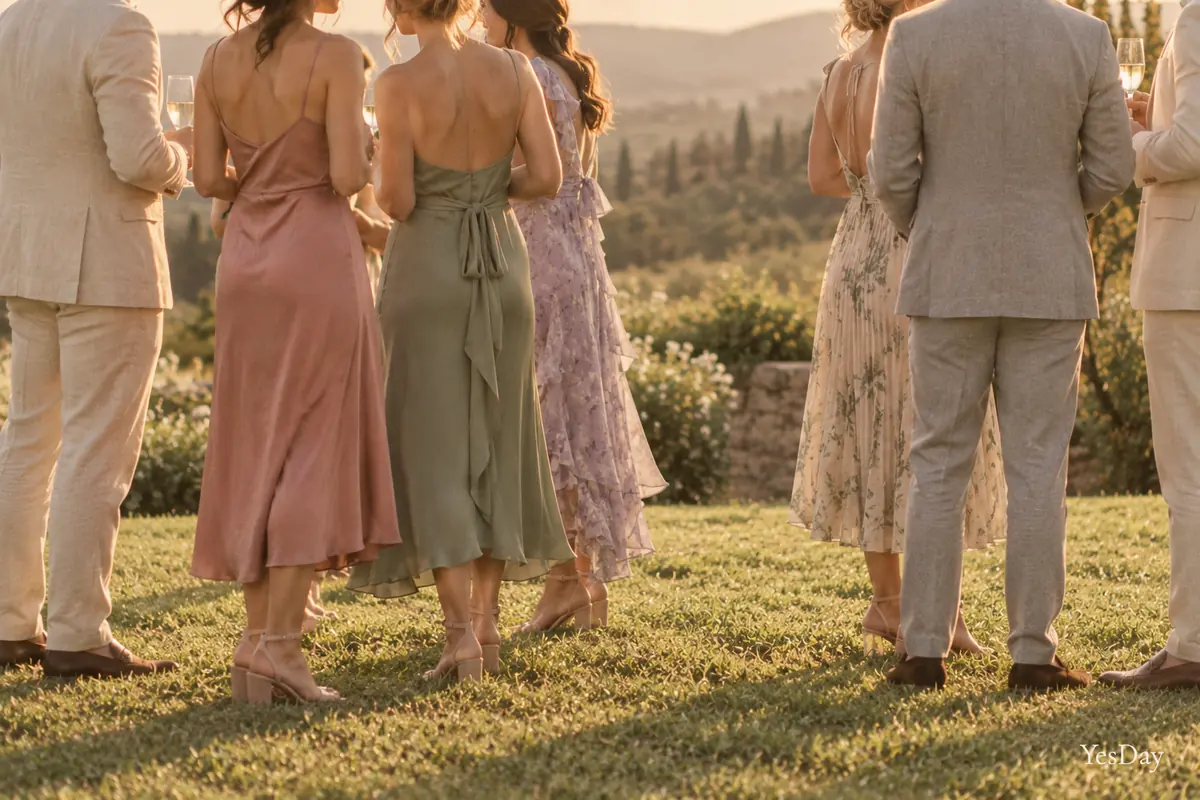 Wedding guests dressed in one colour scheme
Three reasons to introduce a dress code:
- Beautiful photos — group shots with the guests look like a magazine cover, not like an office party
- Help for the guests — many people don't know what to wear to a wedding. A dress code removes that problem
- Atmosphere — a single style makes the event feel carefully planned
Types of wedding dress code
White tie (ultra-formal)
Men: tailcoat, white shirt, bow tie, patent leather shoes. Women: a floor-length evening gown, jewellery. When: a grand palace-style reception. Very rare.
Black tie (formal)
Men: a tuxedo or a dark suit, a tie or bow tie. Women: an evening or cocktail dress. When: an evening wedding in a restaurant, hotel or country estate.
Cocktail (semi-formal)
Men: a suit (not necessarily dark), a tie is optional. Women: a midi or maxi dress, trouser suits are fine. When: the most versatile option for most weddings.
Garden / smart casual
Men: trousers + a shirt (a jacket is optional), loafers. Women: a light dress, a sundress, a skirt. When: a wedding outdoors, in a garden, at a country house.
Beach
Men: light trousers or shorts, a Hawaiian or linen shirt. Women: a sundress, a light dress. When: a wedding on the coast.
How to state the dress code
Option 1: A colour palette
The most popular and simplest way. You name 3–5 colours you would like your guests to wear.
Sample wording:
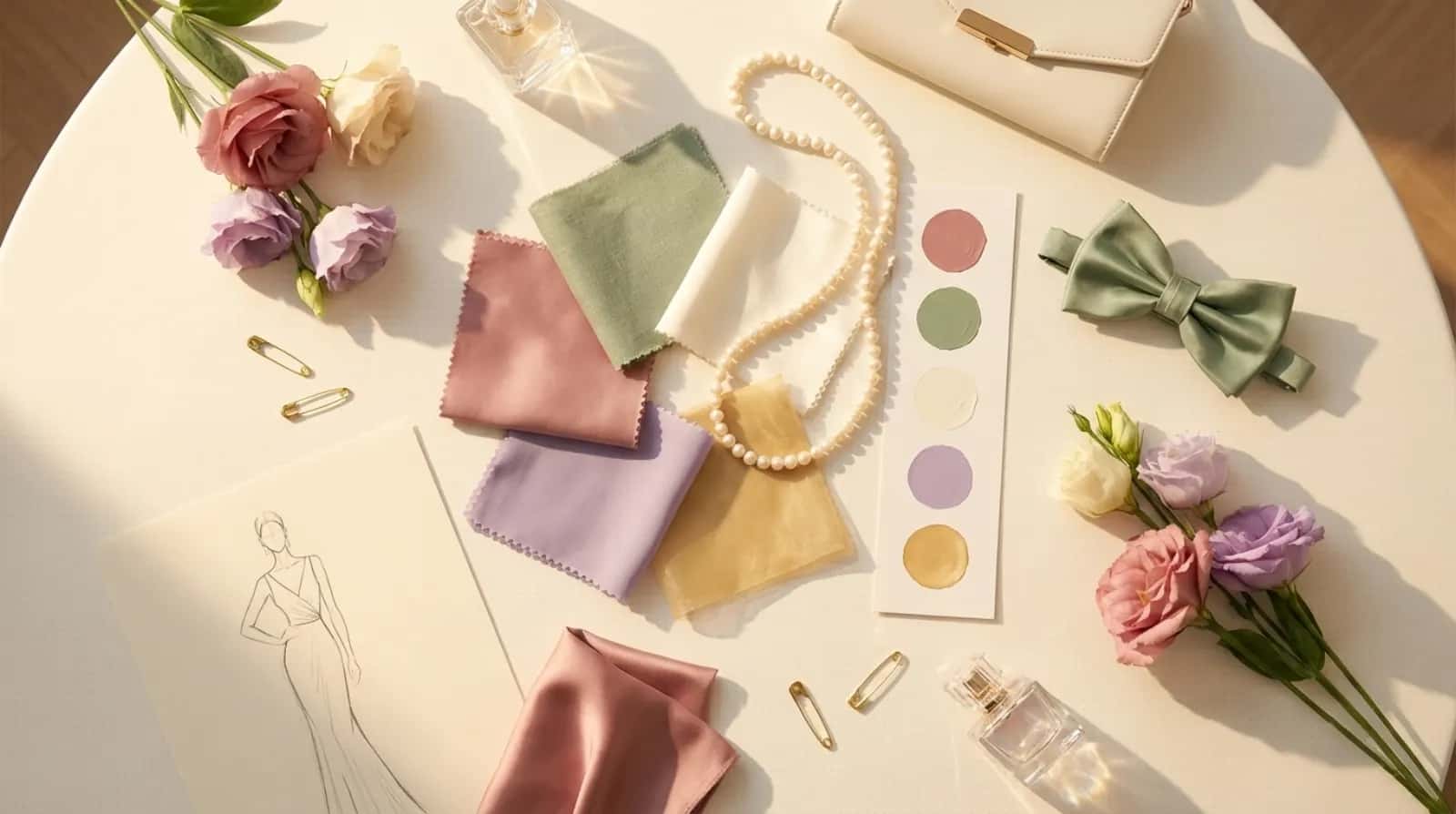
We would be delighted if your outfit were in one of the shades of our palette: dusty rose, sage, ivory, lavender or soft beige. Our main wish is soft, muted tones. Please avoid bright red, black and neon colours.
How to show the colours: A YesDay wedding website has a dedicated "Dress code" section with a colour palette. You choose the colours, and your guests see the exact shades on the screen. There is no need to explain in words what "dusty rose" is — the guest sees the real colour.
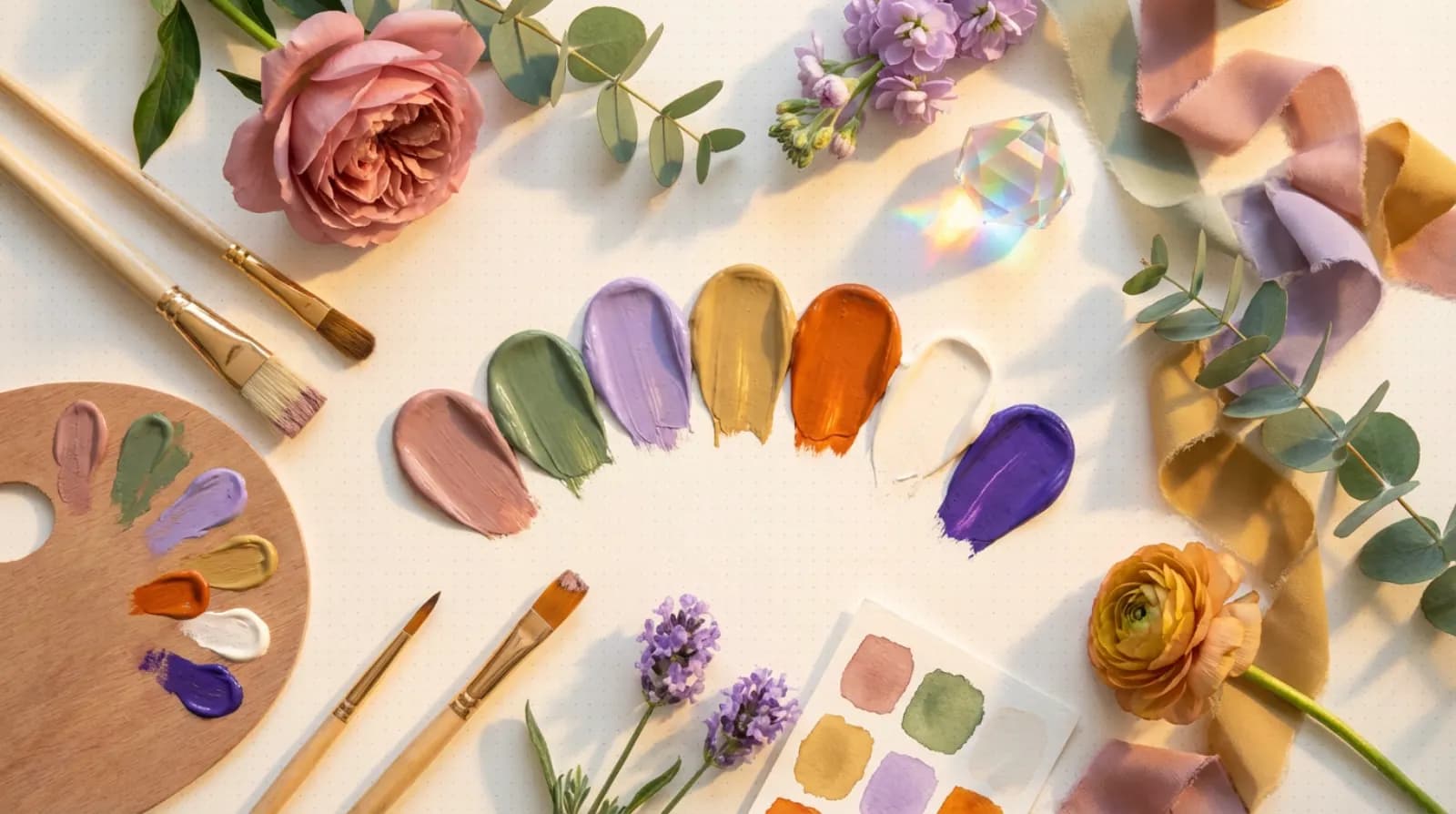
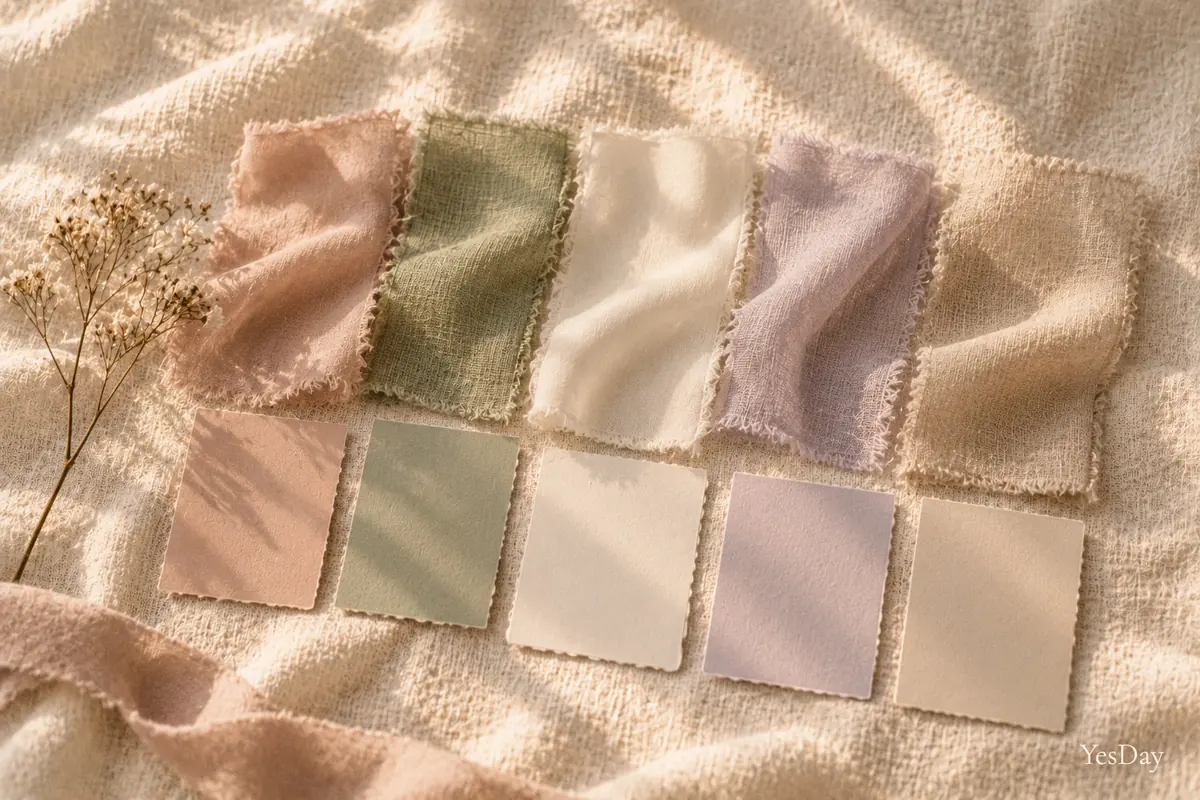 A palette of pastel shades for a wedding
Option 2: Style + palette
Dress code: smart casual in shades of terracotta and ivory. Men: light trousers + a shirt (a jacket is optional). Women: a dress or suit in warm tones. Comfortable shoes are welcome — we will be outdoors!
Option 3: A "don't" dress code
If you would rather not dictate, simply say what to avoid:
We are not setting a strict dress code, but we would be grateful if you did not wear:
- White (it is the bride's colour)
- Black (too sombre for the photos)
- Bright red (it draws too much attention)
Popular palettes of 2026
"Tuscan Summer"
Terracotta + olive + ivory + sand. For countryside and rustic weddings.
"Provence"
Lavender + dusty rose + cream + sage. A versatile palette and the "safest" one.
"Scandinavian Minimalism"
White + grey + light blue + natural wood. For minimalist city weddings.
"Autumn Evening"
Burgundy + mustard + dark chocolate + gold. For autumn weddings with a warm atmosphere.
"Sea Breeze"
Navy + white + sand + coral. For weddings by the water.
Common dress code mistakes
Mistake 1: Requirements that are too strict
"Everyone must wear a pale lavender dress of exactly midi length" is too much. Guests will get nervous and spend money on an outfit they will wear once.
The right way: name a palette of 4–5 colours. Leave the choice of style to the guests.
Mistake 2: A dress code without examples
"Dress code: Garden Party" — and the guest goes off to google what that means.
The right way: explain it in simple words and show photo examples on your wedding website.
Mistake 3: Telling people too late
If a guest learns about the dress code a week before the wedding, they have no time to prepare.
The right way: state the dress code in the invitation (at least 2 months before the wedding).
Mistake 4: Forgetting about the men
Dress codes are often written only for women. Men in black suits next to bridesmaids in pastels look out of place.
The right way: give recommendations for both: "Women — a dress in pastel tones. Men — a light or beige suit, a tie is optional."
Mistake 5: Forgetting about shoes
At a countryside wedding stiletto heels sink into the lawn. At a beach wedding heels get stuck in the sand.
The right way: "The venue is a country estate with a lawn. We recommend comfortable shoes without heels."
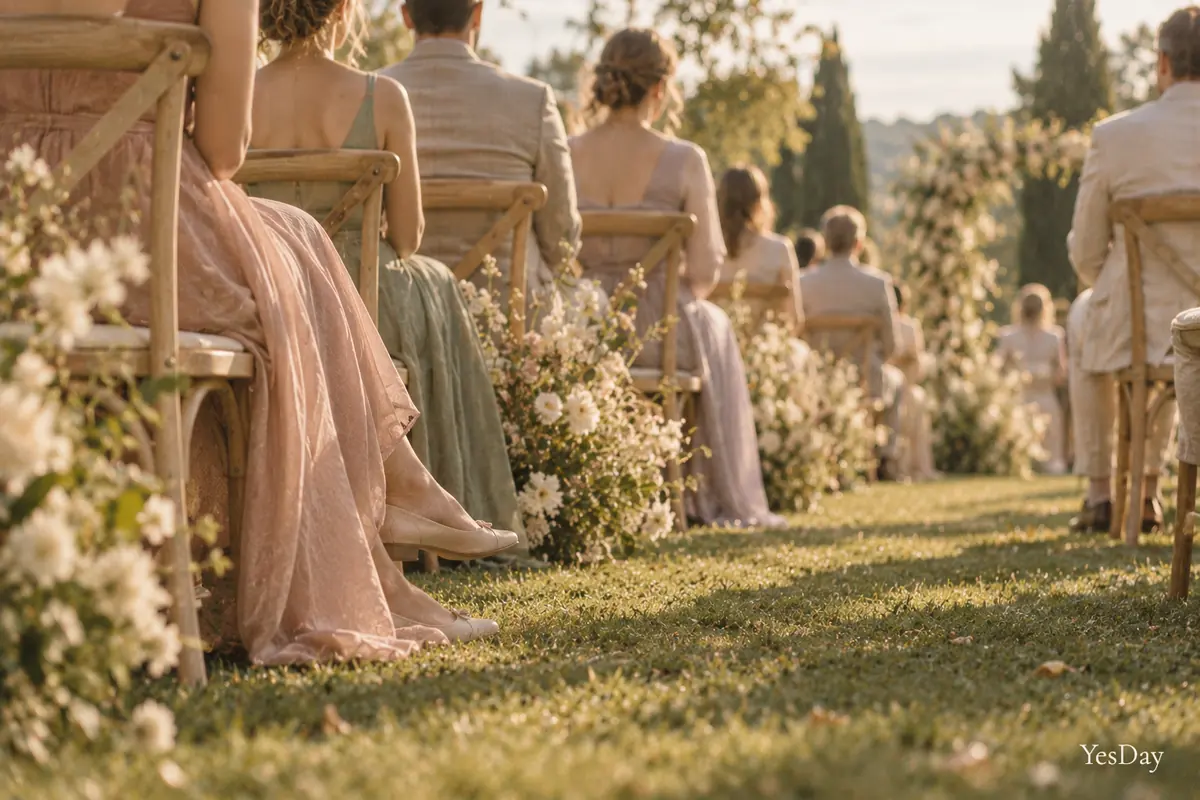 Elegant guests at a wedding ceremony
How to explain the dress code tactfully
Wording that works:
-
❌ "You MUST come in ..."
-
✅ "We would be delighted if your outfit were in shades of ..."
-
❌ "Black is forbidden!"
-
✅ "For the most beautiful photos we have chosen a palette of warm tones — we hope you will join in!"
-
❌ "The dress code is mandatory"
-
✅ "We have prepared a palette to help you choose your outfit"
What if a guest turns up out of dress code?
Nothing. Seriously. Don't make a problem out of it. The photographer will frame the group shots so that they look harmonious. What matters to you is that this person came to share your celebration.
The dress code on your wedding website
On YesDay the "Dress code" section includes:
- A colour palette — the guest sees the exact colours (not descriptions in words)
- A text description — your recommendations on style
- Photo examples — looks for inspiration
- Hints — what to wear and what to avoid
All your guests see this information on your personal wedding website. There is no need to send each of them a separate message with explanations.
Have you already chosen your palette? Create a wedding website and show it to your guests!