 YesDay
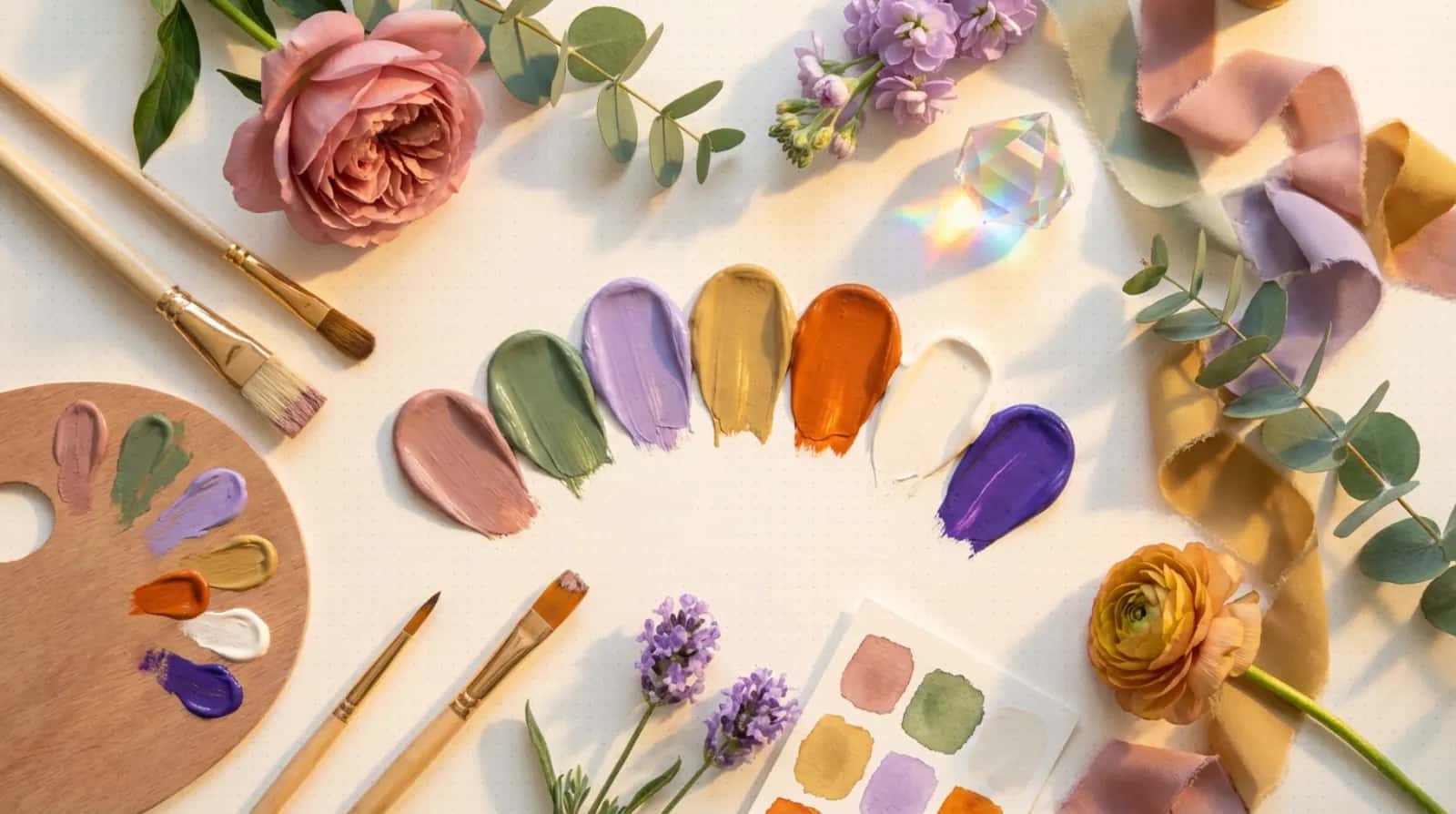
Flowers are the language of a wedding
If the venue is the stage, flowers are the set that creates the mood. In 2026 floristry is going through a real revolution: giant arches made of thousands of roses are on their way out, and light, airy arrangements with character are coming in. Let's look at what is on trend and how to choose the perfect flowers for your wedding.
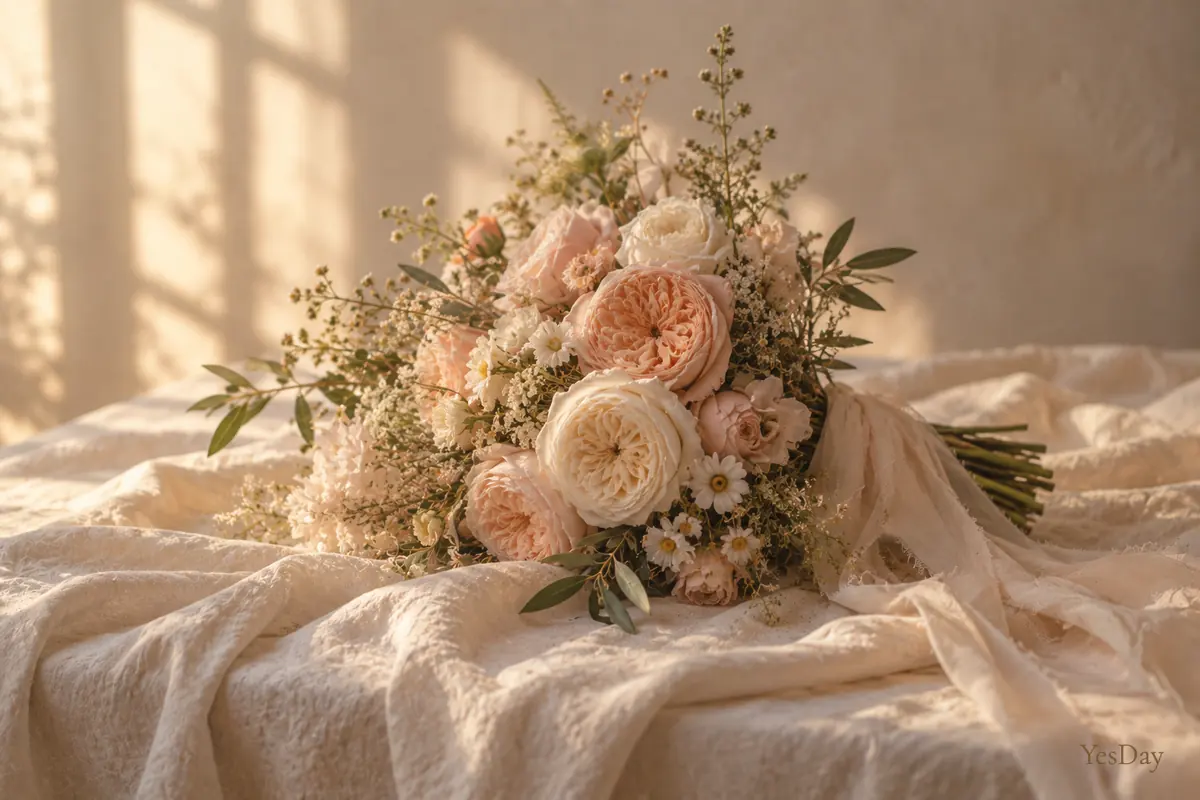 A delicate bridal bouquet of garden roses
Trend 1: Dried and preserved flowers
Probably the most visible trend of the last two years, and in 2026 it has become the norm. Dried flowers are not "dead flowers", as many people think. They are an art form in themselves:
- Pampas grass — the queen of dried flowers. It adds volume and airiness
- Lunaria (honesty) — translucent discs that catch the light
- Lavender — the scent of Provence for rustic weddings
- Cotton — soft "clouds" for winter celebrations
- Cortaderia — a mini version of pampas grass for boutonnieres
Advantages of dried flowers:
| Criterion | Fresh flowers | Dried flowers |
|---|---|---|
| Cost | $$$ | $$ |
| Preparation | 1–2 days ahead | A month ahead |
| Lifespan | Wilt by the evening | Forever |
| Seasonality | Depends on the time of year | No limits |
| Scent | Natural | Minimal |
| Allergies | Possible (pollen) | Rare |
Tip: combine fresh and dried flowers. For example, fresh roses in the centre of the bouquet with pampas grass and lunaria around the edges. The result is full, textured and economical.
Trend 2: David Austin garden roses
They have held their ground for five years running, and for good reason. Garden roses mean:
- A perfect shape: a lush bloom with a hundred petals
- A delicate scent (unlike ordinary roses)
- A palette from pure white to deep burgundy
The most fashionable varieties of 2026:
- Keira — soft peach with a pink centre
- Juliet — the apricot classic
- Patience — white with a light cream tint
- Tess — deep burgundy for autumn weddings
- Constance — bright yellow for bold palettes
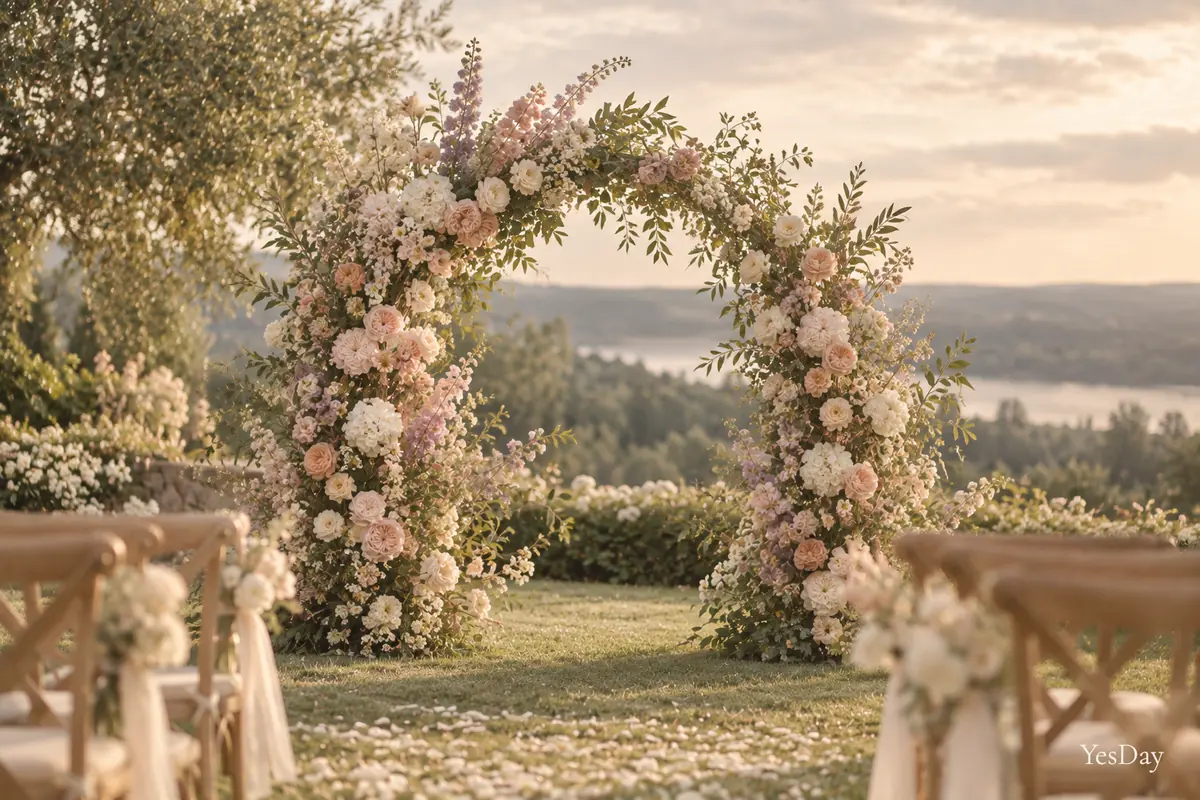 A wedding flower arch in pastel tones
Trend 3: Wild and garden flowers
Perfect for boho, rustic and eco weddings. The bouquet looks as if it has just been gathered in a meadow. The mix includes:
- Ranunculus — the peony's "little brother", and more affordable
- Scabiosa — airy little globes on thin stems
- Cosmos — simple but incredibly photogenic
- Astilbe — fluffy plumes for texture
- Veronica — long spikes for vertical accents
- Eustoma (lisianthus) — a budget alternative to roses
How to style them:
- Bridal bouquet: a loose, "undone" shape
- Groom's boutonniere: a single sprig with greenery
- Centrepieces: low, in clay pots or glass jars
- Arch: asymmetrical, with "wild" shoots
Trend 4: Monochrome and tonal palettes
Instead of contrasting combinations — smooth transitions within one colour:
The "Powder Rose" palette
Pale pink → dusty rose → magenta → burgundy. Flowers: Keira roses, ranunculus, peonies, carnations, scabiosa.
The "Terracotta" palette
Peach → salmon → terracotta → rust. Flowers: Juliet roses, dahlias, chrysanthemums, dried flowers.
The "Sage" palette
Mint → sage → emerald → dark green. Flowers: eucalyptus, olive branches, succulents, green hydrangeas.
The "Lavender" palette
Lilac → lavender → amethyst → violet. Flowers: lavender, delphinium, lilac, clematis.
Trend 5: Greenery as the main character
Not a supporting element but the basis of the arrangement. A minimum of flowers, a maximum of greenery:
- Eucalyptus (populus, cinerea, baby blue) — a universal base
- Ruscus — glossy leaves for dense garlands
- Fern — a woodland atmosphere
- Olive branches — Mediterranean style
- Ivy — cascading arrangements
Greenery garlands on the tables are one of the most striking and at the same time most affordable decor options. A metre of eucalyptus garland costs 500–800 ₽ and covers the whole table.
A seasonal guide to flowers
Seasonal flowers are fresher, more fragrant and 2–3 times cheaper than imported ones.
Spring (April–May)
Tulips, daffodils, lilac, lily of the valley, hyacinths, bird cherry, cherry blossom
Summer (June–August)
Peonies (June only!), roses, hydrangeas, delphiniums, lavender, sunflowers, dahlias
Autumn (September–November)
Chrysanthemums, dahlias, asters, goldenrod, physalis, rose hips, viburnum
Winter (December–March)
Anemones, amaryllis, hippeastrum, cotton, dried flowers, pine branches, cones
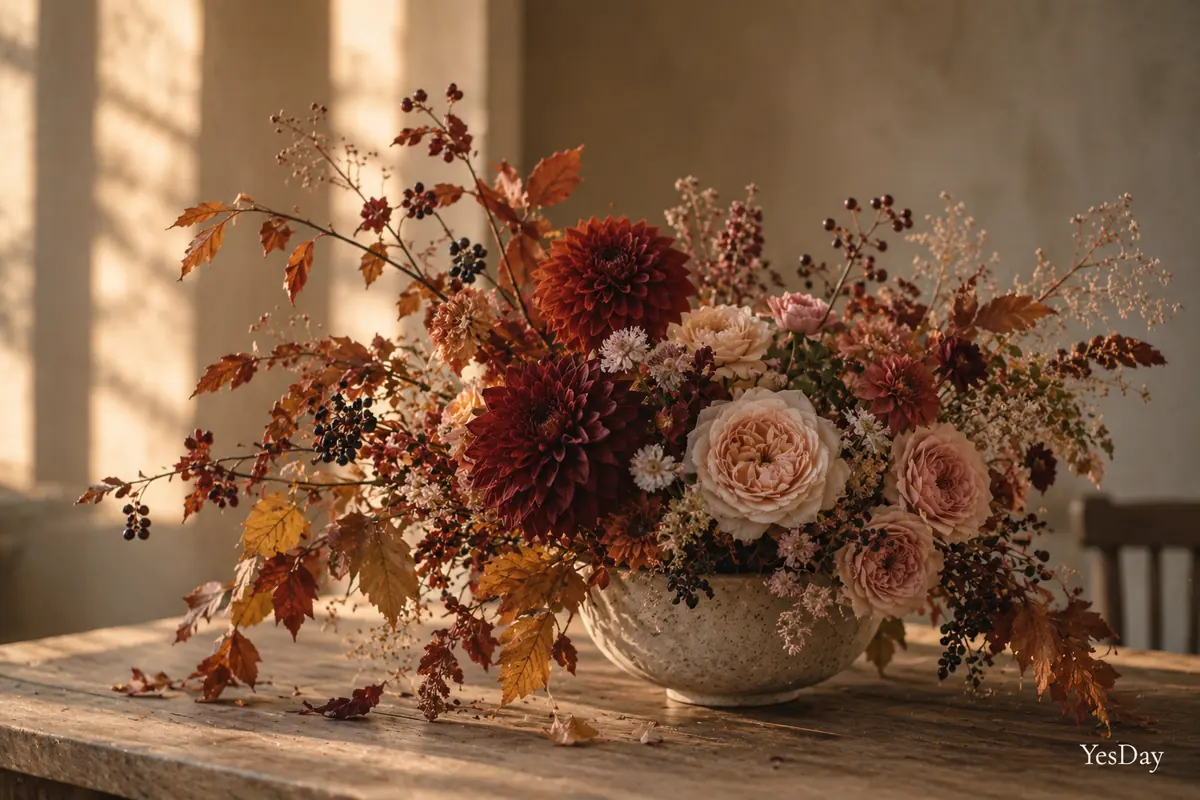 An autumn wedding arrangement with dahlias
How much does wedding floristry cost?
Approximate prices in Moscow (2026):
| Item | Budget | Mid-range | Premium |
|---|---|---|---|
| Bridal bouquet | 5,000–8,000 ₽ | 10,000–18,000 ₽ | 20,000–40,000 ₽ |
| Boutonniere | 500–1,000 ₽ | 1,500–3,000 ₽ | 3,000–5,000 ₽ |
| Table arrangement | 2,000–4,000 ₽ | 5,000–10,000 ₽ | 10,000–25,000 ₽ |
| Arch | 15,000–25,000 ₽ | 30,000–60,000 ₽ | 70,000–150,000 ₽ |
| Total budget (10 tables) | 40,000–80,000 ₽ | 100,000–200,000 ₽ | 250,000+ ₽ |
5 ways to save on flowers
- Choose seasonal flowers — peonies in June cost a third of what they cost in December
- Add greenery — it is cheaper than flowers but creates volume
- Reuse the arrangements — move the flowers from the ceremony to the tables
- Consider dried flowers — you buy them once and use them at the rehearsal, at the wedding and at home
- Simplify the boutonnieres — one sprig of eucalyptus + one rose = elegant and affordable
How to work with a florist
- Show a Pinterest board or examples — "this is the mood I like"
- Name your budget straight away — a good florist will find a solution for any amount
- Trust the professional with the choice of specific varieties
- Order a trial arrangement 2–3 months before the wedding
Put your colour palette on your YesDay wedding website — your guests will know which tones to wear to match the decor.
Which flowers will you choose? Write to us — we will help you find the perfect palette!